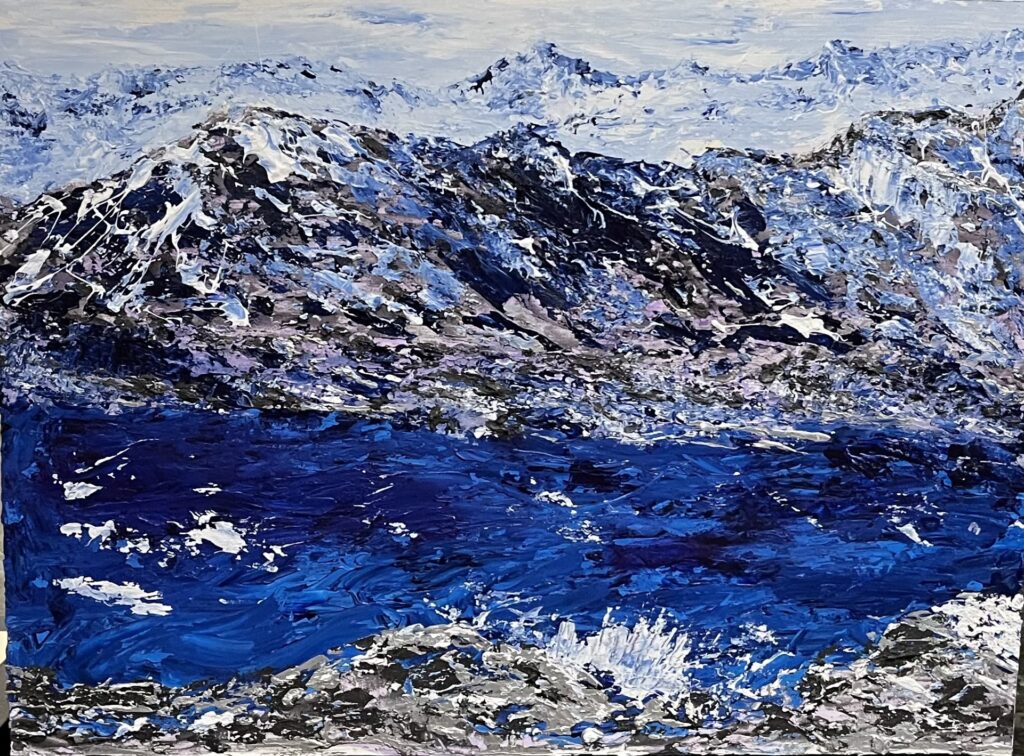
Mixed‑media artwork by Sylvia Armstrong featuring layered textures and acrylic detail.
How Mixed‑Media Art Creates Depth and Texture
Mixed‑media art is one of the most expressive ways an artist can build depth, movement, and tactile richness into a painting. By combining different materials, surfaces, and techniques, mixed‑media work transforms a flat canvas into a layered visual experience that feels alive. Texture invites viewers to lean closer, explore the surface, and connect emotionally with the artwork. It’s this interplay of materials and marks that gives mixed‑media pieces their signature sense of dimension and presence.
Why Texture Matters in Mixed‑Media Art
Texture is what makes a painting feel three‑dimensional rather than smooth and flat. Artists use both real texture—physical buildup created by paste, thick paint, or added materials—and visual texture, which is the illusion of depth created through marks, contrast, and layering. Strong paintings often use both, giving the light something to catch and the eye something to read.
Texture also enhances emotional impact. Rough, bold textures can create drama or tension, while soft, subtle textures can evoke calm or introspection. This tactile quality invites viewers to “feel” the artwork with their eyes, even when they can’t touch it.
How Artists Build Depth Through Layering
Depth in mixed‑media art comes from layering materials intentionally. Each layer adds a new visual or physical element, creating complexity and movement. Artists often combine:
- Translucent washes for luminous, atmospheric depth
- Thick palette‑knife strokes for bold physical ridges
- Collage elements like paper, fabric, or found objects
- Texture pastes or modeling paste for raised surfaces
- Mark‑making with brushes, pens, or unconventional tools
Layering multiple techniques is where the real magic happens—this is how depth gets built and how a painting gains that “come closer” pull.
Materials That Create Texture
Mixed‑media artists use a wide range of materials to build texture, each contributing its own character:
- Acrylic paints — versatile and ideal for thick or thin layers
- Texture paste / modeling paste — creates raised, sculptural surfaces
- Gesso — adds subtle or bold texture depending on application
- Palette knives — produce impasto ridges and bold marks
- Fabric, sand, paper, or found objects — add organic, tactile elements
- Modeling clay or plaster — for sculptural relief or pronounced texture
These materials allow artists to create surfaces that feel weathered, layered, or naturally uneven—qualities that make mixed‑media work visually compelling.
Techniques That Add Dimension
Mixed‑media artists use a variety of techniques to build depth and texture. Some of the most effective include:
- Dry brushing — creates broken, airy streaks that mimic natural grain
- Sponge dabbing — adds porous, organic texture
- Palette‑knife layering — builds sediment‑like ridges and peaks
- Tissue lifting — produces soft erosion effects
- Salt technique — creates mineral‑like blooms in watercolor layers
- Imprinting — presses patterns into wet paint or paste
- Glazing — adds translucent layers that unify and deepen the surface
These techniques help artists create surfaces that feel weathered, layered, and gently uneven—qualities that make mixed‑media art feel natural and expressive.
Combining Media for Stronger Impact
Mixed‑media art shines when different materials interact. For example:
- Thick acrylic layers can sit beneath delicate watercolor washes.
- Collaged paper can peek through translucent glazes.
- Modeling paste can create raised areas that catch dry‑brush marks.
- Found objects can anchor the composition and add sculptural interest.
Combining media adds both actual texture (physical buildup) and implied texture (visual detail), creating a richer, more engaging surface.
Keeping Texture Balanced
While texture adds depth and interest, restraint is key. The most convincing mixed‑media surfaces include:
- Irregularity — edges that wobble, patterns that don’t repeat
- Depth shifts — some areas smooth, others catching light
- Breathing space — calm areas that balance textured sections
Texture should feel intentional, not overwhelming. Building it in layers—pausing between passes—keeps the surface natural and cohesive.
The Emotional Power of Mixed‑Media Texture
Texture isn’t just a visual tool—it’s an emotional one. Raised surfaces can feel bold, energetic, or dramatic. Soft textures can feel gentle, reflective, or dreamlike. Mixed‑media art allows artists to express these emotional qualities through the physicality of the materials themselves.
When viewers encounter a textured mixed‑media piece, they’re not just seeing the artwork—they’re experiencing it. The surface becomes a story of layers, choices, and movement, revealing the artist’s hand and intention.
Conclusion
Mixed‑media art creates depth and texture by combining materials, layering techniques, and embracing both physical and visual texture. These elements work together to transform a flat surface into a dynamic, tactile experience that draws viewers in. Whether through bold impasto, delicate washes, or unexpected materials, mixed‑media texture adds richness, emotion, and dimension—making each piece uniquely alive.