How to Draw for Beginners
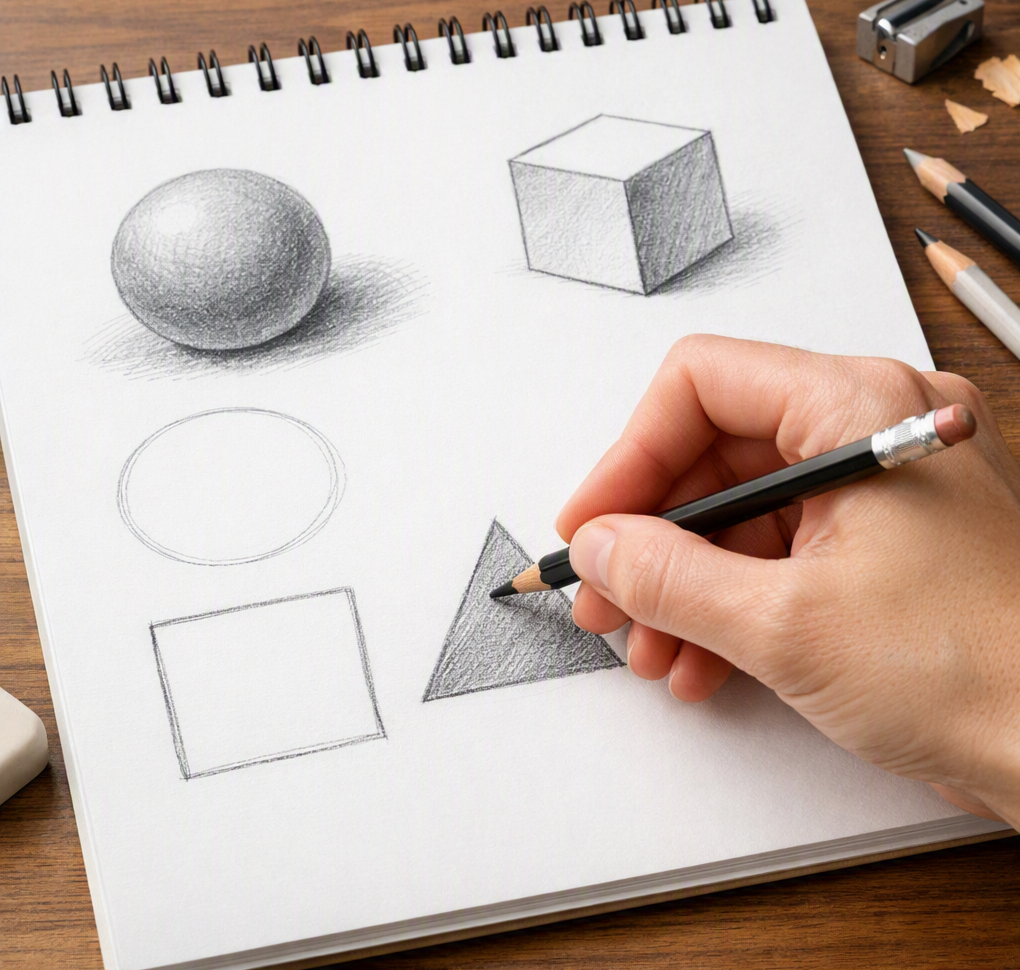
A simple, confidence‑building guide for new artists
Drawing is the foundation of almost every art form — painting, digital art, mixed media, and even sculpture. Whether you’re brand new or returning after years away, this guide will help you build the essential skills you need to start drawing with confidence.
This is a beginner‑friendly, step‑by‑step introduction to shapes, shading, proportions, and simple exercises you can practice today.
Why Drawing Is the Best Place to Start
Drawing teaches you how to see like an artist.
When you learn to draw, you learn:
- how shapes form objects
- how light creates shadows
- how proportions make things look “right”
- how lines express movement and emotion
These skills carry over into acrylic, watercolor, digital art, and mixed media.
1. Start With Basic Shapes
Everything you see in the world can be broken down into simple shapes:
- circles
- squares
- triangles
- rectangles
- ovals
Try this exercise:
Draw 10 circles, 10 squares, and 10 triangles. Don’t worry about perfection — focus on:
- smooth lines
- consistent pressure
- confident strokes
This builds muscle memory and line control.
2. Practice Line Control
Line control is one of the most important beginner skills.
Practice these:
- straight lines
- curved lines
- light lines
- heavy lines
- long strokes
- short strokes
Try filling a page with lines that gradually get darker as you press harder. This teaches you how to control pressure — a key skill for shading.
3. Learn Basic Shading
Shading is how you turn flat shapes into 3D objects.
Start with:
- a light source (top left is easiest)
- a simple shape (circle or square)
- a gradient from light to dark
Practice:
Draw a circle. Shade one side darker. Blend gradually toward the light source. This teaches you how light behaves — essential for realistic drawing.
4. Understand Proportions
Proportions help objects look correct and balanced.
Start with simple objects:
- cups
- apples
- boxes
- bottles
Break each object into shapes:
- an apple = circle + shading
- a cup = cylinder + ellipse
- a box = square + perspective lines
Beginner tip:
Draw lightly first. Add details later. Darken lines at the end.
5. Easy Beginner Exercises
These exercises build skill fast:
- Gesture lines: quick, loose lines that capture movement.
- Contour drawing: draw the outline of an object without shading.
- Blind contour: draw an object without looking at your paper.
- Value scales: draw 6–10 boxes from light to dark.
- Simple still life: arrange 2–3 objects and draw them using shapes and shading.
Do these regularly and your drawing will improve dramatically.
6. Recommended Beginner Tools
You don’t need expensive supplies.
Start with:
- HB pencil (general drawing)
- 2B or 4B pencil (shading)
- kneaded eraser
- smooth sketchbook
- blending stump (optional)
These are affordable and perfect for beginners.
7. A Simple Practice Routine
Consistency matters more than perfection.
Try this weekly routine:
- Day 1: shapes and lines
- Day 2: shading practice
- Day 3: simple objects
- Day 4: gesture drawing
- Day 5: still life
- Weekend: draw something you enjoy
Even 10–15 minutes a day builds skill quickly.
8. What to Expect as a Beginner
You will:
- draw things that look “off”
- erase a lot
- struggle with proportions
- improve faster than you expect
Drawing is a skill — not a talent. The more you practice, the better you get.
9. Next Steps
Once you feel comfortable with shapes, shading, and proportions, you’re ready to explore:
- Acrylic painting
- Watercolor techniques
- Digital art basics
- Mixed media experiments
Drawing is your foundation — and you’re already building it.
Have Questions?
If you’d like a personalized beginner exercise or want feedback on your drawings, reach out anytime.
Email: info@sylviaarmstrongexpressions.com