Beginner’s Guide to Acrylic Painting
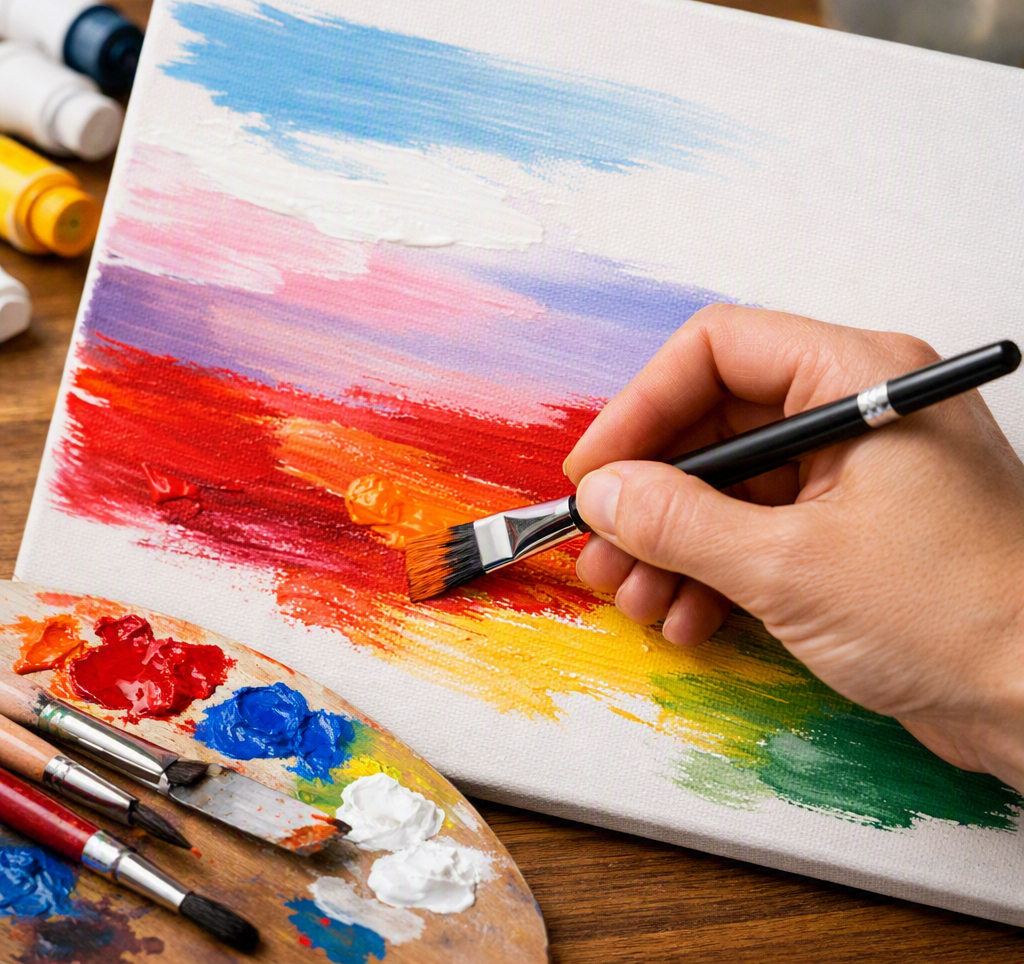
A friendly, step‑by‑step introduction to acrylics for new artists
…
A friendly, step‑by‑step introduction to acrylics for new artists
Acrylic painting is one of the best mediums for beginners. It’s forgiving, fast‑drying, affordable, and incredibly versatile. Whether you want to paint bold abstracts, soft landscapes, or textured mixed‑media pieces, acrylics give you the freedom to explore without fear.
This guide will walk you through the essential supplies, beginner techniques, and simple exercises to help you start painting with confidence.
Why Acrylic Is Perfect for Beginners
Acrylics are loved by beginners because they are:
- easy to control
- quick to dry
- water‑based (no harsh chemicals)
- great for layering
- affordable
- usable on many surfaces
They also let you experiment — you can paint thin like watercolor or thick like oil.
1. Essential Acrylic Painting Supplies
You don’t need a huge setup to begin. Start simple.
Paints
Choose student‑grade acrylics to begin. They’re affordable and blend well.
Recommended starter colors:
- Titanium White
- Mars Black
- Ultramarine Blue
- Phthalo Blue
- Cadmium Red (or hue)
- Burnt Umber
- Burnt Sienna
- Yellow Ochre
Brushes
Start with 4 basic brushes:
- Flat brush (medium)
- Round brush (medium)
- Detail brush (small)
- Large flat brush (for backgrounds)
Surfaces
Great beginner surfaces:
- canvas panels
- stretched canvas
- acrylic paper
- mixed‑media pads
Other Essentials
- palette (plastic or paper)
- cup of water
- paper towels
- palette knife (optional)
- apron or old shirt
2. Understanding Paint Thickness
Acrylics can behave differently depending on how much water you use.
Thin paint (more water)
- smooth
- transparent
- watercolor‑like
Thick paint (less water)
- textured
- opaque
- great for bold strokes
Experiment with both to learn how acrylics respond.
3. Beginner Blending Techniques
Blending is one of the most important acrylic skills.
Wet‑on‑wet blending
Blend colors while they’re still wet. Work quickly — acrylics dry fast.
Gradient blending
Try blending:
- dark → medium → light
- blue → purple → pink
- yellow → orange → red
Dry brushing
Use a nearly dry brush to add soft texture.
4. Layering Basics
Acrylics shine when you layer.
Tips:
- let each layer dry before adding the next
- start with large shapes
- add details last
- use darker colors first, lighter colors on top
Layering creates depth and dimension.
5. Simple Beginner Projects
These projects help you learn fast:
- Gradient sky: blend blue → purple → pink → orange.
- Silhouette landscape: gradient background + black trees or mountains.
- Abstract color blocks: use masking tape for clean geometric shapes.
- Textured palette‑knife strokes: apply thick paint for bold texture.
- Simple still life: paint a cup, apple, or vase using shapes + shading.
6. Cleaning & Brush Care
Acrylic dries quickly — so clean your brushes often.
Tips:
- rinse brushes between colors
- never let paint dry on bristles
- reshape brushes after washing
- store brushes upright
Good brush care makes painting easier and keeps your tools lasting longer.
7. Common Beginner Mistakes
Avoid these early pitfalls:
- using too much water
- over‑blending until colors turn muddy
- painting details too early
- not letting layers dry
- pressing too hard with brushes
Remember: acrylics reward patience and layering.
8. A Simple Practice Routine
Try this weekly routine:
- Day 1: color mixing
- Day 2: blending practice
- Day 3: simple shapes with shading
- Day 4: layering exercises
- Day 5: small painting project
- Weekend: paint something you enjoy
Consistency builds confidence.
9. Next Steps
Once you’re comfortable with acrylic basics, explore:
- glazing
- texture mediums
- palette‑knife painting
- mixed‑media layering
- color theory
- composition techniques
Acrylics are incredibly flexible — you can grow in any direction you choose.
Have Questions?
If you’d like personalized beginner exercises or help choosing supplies, reach out anytime.
Email: info@sylviaarmstrongexpressions.com